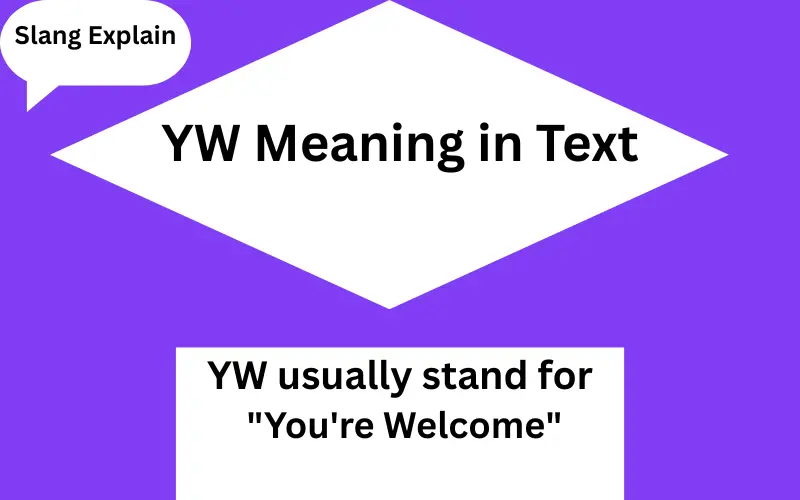
The YW meaning in text is “You’re Welcome.” It’s a short and friendly reply people send after someone says “thank you.” Instead of typing the full phrase, many texters simply write YW to acknowledge gratitude quickly. If you’ve ever wondered what does YW mean, what does YW mean in text, or what does YW mean in a text, the answer is usually a polite way of saying “No problem” or “You’re welcome.”
Imagine helping a friend find an important document, recommending a useful app, or sharing the answer to a quick question. A few seconds later, they reply with a simple “Thanks!” Instead of typing an entire sentence, you respond with just two letters: YW. The conversation keeps moving, and both people instantly understand what’s being said.
That’s why YW has remained popular for years. While many internet abbreviations come and go, YW solves a basic communication need that never disappears. People thank each other every day, and they need a quick way to respond. Whether you’re texting friends, chatting in a group, messaging coworkers, or replying on social media, understanding the YW meaning in text helps you communicate naturally and confidently.
YW Meaning at a Glance
| Feature | Details |
| Abbreviation | YW |
| Most Common Meaning | You’re Welcome |
| Tone | Friendly and polite |
| Common Use | Replying to thanks |
| Used On | Text messages, WhatsApp, Instagram, Discord, Messenger, social media |
| Formal or Informal? | Mostly informal |
What Does YW Mean in Text?
In texting, YW almost always stands for “You’re Welcome.”
It’s commonly used after someone expresses appreciation or gratitude. Instead of typing the complete phrase, people use the abbreviation because it’s faster and still easy to understand.
For example:
“Thanks for helping me with my homework.”
A common reply might simply be:
“YW 😊”
The meaning doesn’t change. The abbreviation just makes the response quicker.
Unlike many internet slang terms that can have multiple interpretations, YW is usually straightforward. In most conversations, there is very little confusion about what it means.
Why Do People Use YW Instead of “You’re Welcome”?
Text messaging has always encouraged shorter communication.
People use abbreviations because:
- They save time.
- They reduce typing.
- They keep conversations flowing naturally.
- Most users already understand them.
- They feel casual and friendly.
Think about how often people say “thank you” every day. If every reply required typing the full phrase “You’re welcome,” conversations would be slightly slower. YW provides the same meaning with fewer characters.
That’s one reason it remains popular despite the constant arrival of new slang terms.
The Hidden Meaning Behind YW
Most people assume YW is simply a shortcut.
But there’s another reason it became popular.
Digital conversations move much faster than face-to-face conversations. In person, a smile or nod can communicate friendliness. Online, people often need words or symbols to create the same feeling.
YW acts as a quick acknowledgment.
It tells the other person:
- I saw your thanks.
- I appreciate your gratitude.
- You’re welcome.
- No hard feelings.
- Happy to help.
Those two letters do more than most people realize.
Real-Life Situations Where People Use YW
| Situation | Natural Usage |
| A friend thanks you for advice | “YW! Hope everything works out.” |
| Someone appreciates a recommendation | “YW, it’s one of my favorite apps.” |
| A coworker thanks you in a team chat | “YW, happy to help.” |
| Someone thanks you for directions | “YW! Have a safe trip.” |
| A family member thanks you for assistance | “YW 😊” |
| Someone appreciates shared information | “YW, glad it helped.” |
Notice that YW feels most natural after gratitude has already been expressed.
When YW Sounds Natural—and When It Doesn’t
Like many abbreviations, YW works best in casual communication.
It sounds natural when:
- Texting friends.
- Chatting with family.
- Replying in group chats.
- Messaging online communities.
- Having informal conversations.
It may not be ideal when:
- Writing professional emails.
- Responding to clients.
- Sending formal business communication.
- Communicating with people unfamiliar with texting abbreviations.
For example:
Casual Text
Thanks for sharing the notes!
YW 😊
Perfectly normal.
Formal Email
Thank you for your assistance regarding the project.
Replying only with “YW” may feel too informal. Writing “You’re welcome” would be more professional.
The audience matters.
Where You’ll Commonly See YW Online
One reason YW has survived for so long is that it works almost everywhere.
You can find it on:
- SMS messages
- Facebook Messenger
- Instagram DMs
- Discord servers
- Telegram chats
- Snapchat conversations
- Online gaming communities
- Social media comments
Unlike platform-specific slang, YW is widely recognized across different apps and age groups.
Someone who uses WhatsApp understands it.
Someone who spends most of their time on Discord understands it.
Someone texting from a basic mobile phone usually understands it too.
That universal recognition makes YW surprisingly powerful.
Why YW Is Still Popular After All These Years
Many internet abbreviations disappear when trends change.
YW is different because the need it serves never disappears.
People continue to:
- ask questions,
- receive help,
- share recommendations,
- solve problems,
- express gratitude.
As long as people say “thank you,” there will always be a need for responses like “you’re welcome.”
That’s why YW has remained relevant while many older internet abbreviations have faded away.
YW Isn’t the Only Way to Reply to Thanks
Here’s something interesting.
Many people understand YW but rarely use it themselves.
Instead, they choose alternatives like:
- No problem
- Anytime
- Glad to help
- You’re welcome
- Of course
- Happy to help
The preferred response often depends on personality, age group, and conversation style.
Some people love abbreviations.
Others prefer full words.
Both approaches are completely acceptable.
Can YW Have Other Meanings?
If you’re searching what does YW mean, you’ll probably notice that different websites list several definitions. That’s because abbreviations often change depending on where they’re used.
However, in everyday conversations, YW almost always means “You’re Welcome.”
There are a few uncommon meanings in business or specialized industries, but the average person is unlikely to encounter them in a normal chat. If someone replies “YW!” after you thank them, there’s no hidden meaning—they’re simply acknowledging your appreciation politely.
The easiest rule to remember is this:
If YW appears after “Thanks,” “Thank you,” or “TY,” it almost certainly means “You’re Welcome.”
YW vs Other Common Replies
Not every response to “thank you” sounds the same. Some are warmer, while others are more casual or playful.
| Reply | Meaning | Best Used When |
| YW | You’re Welcome | Everyday texting |
| NP | No Problem | Casual conversations |
| Anytime | Happy to help | Friends and family |
| No worries | It’s okay | Informal chats |
| Glad to help | Friendly and supportive | Personal or work chats |
| You’re Welcome | Full phrase | Formal situations |
Although these replies are similar, each creates a slightly different impression. YW is polite without sounding overly formal, making it one of the easiest responses to use.
Why YW Has Stayed Popular
Many internet abbreviations disappear after a few years, but YW has remained useful because people thank each other every day.
Whether you’re:
- sharing notes,
- sending a link,
- helping someone with homework,
- giving gaming advice,
- or answering a question,
someone will probably reply with “Thanks!”
Instead of writing two complete words every time, many people naturally answer with YW.
Its simplicity is exactly why it has survived while countless other abbreviations have faded away.
Common Mistakes People Make
One of the biggest mistakes is assuming every abbreviation is widely understood.
Although YW is common, not everyone immediately recognizes it. If you’re talking to someone who rarely uses internet abbreviations, writing “You’re welcome” may actually be clearer.
Another mistake is using YW in professional communication.
For example:
❌ Email to a client
YW!
This can appear too casual.
A better response would be:
You’re very welcome. Please let me know if you need anything else.
Finally, some people overuse abbreviations in every sentence. Mixing normal language with abbreviations usually makes conversations feel more natural.
Tips for Using YW Naturally
Using YW is easy, but a few habits make it sound more genuine.
- Use it after someone thanks you.
- Add an emoji if you want the reply to feel warmer.
- Write the full phrase in formal emails.
- Match the other person’s communication style.
- Don’t force abbreviations if the conversation already feels professional.
Remember, the goal is to make conversations easier—not harder to understand.
Interesting Facts About YW
| Fact | Why It Matters |
| YW is one of the shortest polite replies online. | Two letters can replace an entire phrase. |
| It works across almost every messaging platform. | You can use it on WhatsApp, Discord, Instagram, Snapchat, and SMS. |
| The meaning rarely changes in texting. | Unlike many abbreviations, YW is usually straightforward. |
| Many people add emojis after YW. | Emojis help make the reply sound warmer and friendlier. |
Unlike trendy slang that changes every year, YW has stayed relevant because thanking people—and replying politely—is part of everyday communication.
See Also:
FAQs
What does YW mean in text?
YW means “You’re Welcome.” It’s commonly used as a quick reply after someone says thank you.
What does YW mean?
In most online conversations, YW simply stands for “You’re Welcome.”
What does YW mean in a text?
If someone replies with YW in a text message, they’re politely saying “You’re Welcome.”
Is YW internet slang?
Not exactly. It’s better described as a texting abbreviation because it’s simply a shortened version of a common phrase.
Is YW still popular?
Yes. It’s widely used across messaging apps and social media because it’s quick, polite, and easy to understand.
Can YW have other meanings?
Yes, but they’re uncommon. In everyday texting, YW almost always means “You’re Welcome.”
Should I use YW at work?
It’s fine in casual workplace chats, but writing “You’re welcome” is more appropriate in formal emails.
Is YW rude?
No. It’s generally considered friendly and polite. Adding an emoji can make it sound even warmer.
Can I reply with YW after “TYSM”?
Absolutely. YW is a natural response to TY, TYSM, Thanks, or Thank you.
Should I write YW or You’re Welcome?
Use YW for casual conversations and You’re welcome when you want to sound more formal or professional.
Conclusion
The YW meaning in text is simple, but it’s also one of the most useful abbreviations in digital communication. Instead of typing “You’re Welcome” every time someone thanks you, two letters are enough to keep the conversation friendly, polite, and moving naturally. That’s why YW continues to appear in text messages, social media chats, gaming communities, and group conversations every day.
If you were searching what does YW mean, what does YW mean in text, or what does YW mean in a text, the answer is almost always “You’re Welcome.” Once you understand the context and know when to use the abbreviation—or when the full phrase is a better choice—you’ll be able to reply naturally and confidently in almost any online conversation.