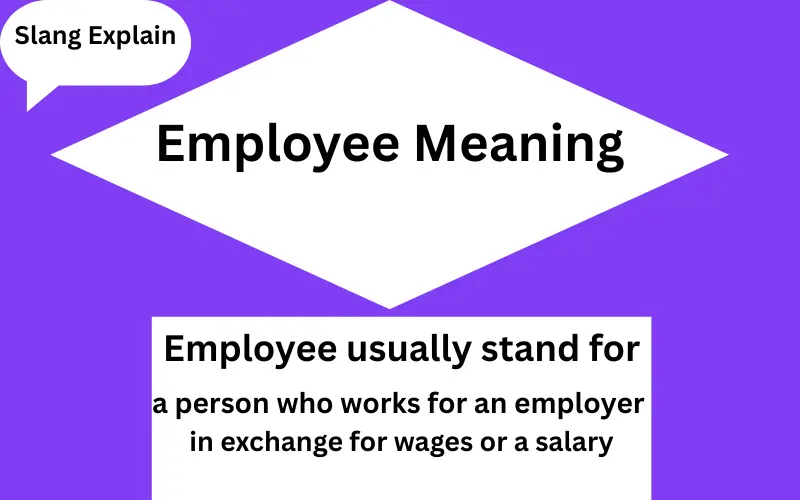
The word employee refers to a person who works for an employer in exchange for wages or a salary. An employee performs assigned duties under the direction of a company, business, organization, or individual. If you’re looking for the employee meaning, employ definition, or employed definition, they all relate to the relationship between a worker and an employer, although each term has a slightly different use.
Example:
Sarah works as a marketing assistant at a software company. She receives a monthly salary and follows her manager’s instructions. Sarah is an employee because she works for an employer under an employment agreement.
Whether you’re filling out a job application, reading an employment contract, or simply trying to improve your English vocabulary, you’ve probably come across words like employee, employ, employed, and employs. These terms are commonly used in workplaces around the world, but many people aren’t sure how they differ from one another. Although they share the same root word, each one has its own meaning and grammatical role depending on how it’s used in a sentence.
In this guide, you’ll learn the complete employee meaning, the employ definition, the meaning of employs, and the employed definition with easy explanations and practical examples. We’ll also explore how these words are used in everyday conversations, business settings, job interviews, employment documents, and professional communication. By the end of this article, you’ll know exactly when and how to use each term correctly without confusing them.
Employee Meaning at a Glance
| Term | Meaning |
| Employee | A person who works for an employer for wages or salary |
| Word Type | Noun |
| Common Use | Employment, Business, Human Resources |
| Opposite | Employer |
| Related Words | Employ, Employed, Employment, Employs |
What Is the Employee Meaning?
The employee meaning is simple but important. An employee is a person hired by an employer to perform specific duties or services in exchange for payment. This payment may come as a salary, hourly wage, commission, or another agreed form of compensation.
Employees work in nearly every industry, including healthcare, education, retail, technology, manufacturing, finance, hospitality, and government. They may work full-time, part-time, temporarily, seasonally, or under fixed-term contracts.
Unlike independent contractors or freelancers, employees usually work under the supervision of an employer. They often follow company policies, scheduled working hours, and job responsibilities outlined in an employment agreement.
For example:
Michael works as an accountant for a construction company. He reports to the finance manager every day and receives a monthly salary. Michael is an employee because he works under the company’s direction.
Another example:
Emily teaches mathematics at a public school. She has an employment contract and receives benefits along with her salary. She is an employee of the school district.
The employee-employer relationship creates legal responsibilities for both sides. Employees are expected to perform their duties professionally, while employers are responsible for providing agreed wages, maintaining workplace safety, and complying with labor laws.
Employ Definition
Many people confuse employee with employ, but they serve different purposes in English.
The employ definition is:
To hire someone to perform work or provide services in return for payment.
Unlike employee, which is a noun, employ is a verb. It describes the action of hiring or making use of someone’s skills.
For example:
The company plans to employ 50 new workers this year.
Here, employ means to hire.
Another example:
Many hospitals employ experienced nurses to provide quality patient care.
The word can also mean to make use of something.
Example:
The engineer employed advanced software to complete the project.
In this sentence, employed means used rather than hired.
Because of these two meanings, context is important whenever you read or hear the word employ.
What Does Employs Mean?
The word employs is simply the third-person singular form of the verb employ. It is used when talking about one person, company, or organization that hires workers or uses something.
For example:
The hospital employs over 2,000 healthcare professionals.
Meaning:
The hospital hires more than 2,000 employees.
Another example:
The company employs modern technology to improve customer service.
Here, employs means uses, not hires.
This dual meaning makes employs a versatile word in English. Whether it refers to hiring people or using tools and methods depends entirely on the sentence.
Why the Word Employee Is Important
The word employee appears frequently in daily life because employment is a major part of society. Businesses, schools, hospitals, government agencies, and nonprofit organizations all depend on employees to provide services and achieve their goals.
You’ll commonly encounter this word when:
- Applying for jobs
- Reading employment contracts
- Completing tax documents
- Opening bank accounts
- Applying for visas
- Signing workplace policies
- Reading company handbooks
- Completing insurance forms
Knowing the exact employee meaning helps you understand these documents more confidently.
For example, many forms ask:
“Are you currently employed?”
This question simply asks whether you currently have a job.
Similarly:
“Number of employees”
This refers to the total number of people working for a company.
Employee in Everyday Communication
The word employee is not limited to legal or business documents. People also use it in everyday conversations.
For example:
Friend: Where does your brother work?
Reply: He’s an employee at a software company.
Another example:
Manager: Every employee must complete the training program.
Here, the manager is referring to all workers within the company.
You might also hear:
“She’s one of our newest employees.”
or
“Employee benefits include health insurance and paid leave.”
Because the word appears so frequently in both professional and casual conversations, it’s one of the most useful employment-related vocabulary words to know.
Employee Examples in Real Conversations
| Conversation | Meaning |
| I’m a full-time employee. | I work for a company full-time. |
| The company employs hundreds of people. | The company hires many workers. |
| She became an employee last month. | She started working there recently. |
| Are you currently employed? | Do you have a job now? |
| Every employee receives training. | All workers receive training. |
Employee Meaning in Different Workplaces
Although the employee meaning remains the same, responsibilities vary depending on the workplace.
Corporate Offices
Employees handle administration, finance, marketing, customer service, human resources, technology, and management tasks.
Healthcare
Doctors, nurses, technicians, pharmacists, therapists, and administrative staff all work as employees within hospitals and clinics.
Education
Teachers, professors, librarians, office staff, and counselors are employees of schools and universities.
Retail
Cashiers, sales associates, supervisors, warehouse workers, and store managers are employees responsible for serving customers and operating businesses.
Manufacturing
Factory employees may assemble products, inspect quality, maintain equipment, or manage production processes.
Regardless of the industry, every employee contributes to the success of the organization through their knowledge, skills, and daily responsibilities.
Employee vs Related Employment Terms
Many people confuse employee with similar employment-related words because they all come from the same root word. However, each term has its own meaning and grammatical role. Learning the differences will help you use these words correctly in both written and spoken English.
| Word | Meaning | Example |
| Employee | A person who works for an employer | She is an employee at a bank. |
| Employer | A person or company that hires workers | The employer offered a higher salary. |
| Employ | To hire or make use of | The company employs skilled engineers. |
| Employed | Having a job or being hired | He has been employed for five years. |
| Employment | The state of having work | She is seeking full-time employment. |
Although these words are closely related, using the correct one depends on whether you’re referring to a person, an action, or a condition.
For example:
- Employee = the worker.
- Employer = the company or person who hires.
- Employ = the action of hiring.
- Employed = someone who currently has a job.
- Employment = the overall work relationship.
Employed Definition
If you’re looking for the employed definition, it simply means having a job or being hired to work for an employer.
Someone who is employed performs work in exchange for wages, a salary, or other agreed compensation.
For example:
James is employed by an international software company as a project manager.
This means James currently has a job at that company.
Another example:
After graduating from university, Maria became employed within three months.
Here, employed indicates that Maria found a job.
The word can also describe the use of something instead of hiring someone.
Example:
The scientist employed a new research method during the experiment.
In this sentence, employed means used.
Because the word has more than one meaning, the surrounding sentence always determines the correct interpretation.
Common Workplace Situations Where These Words Are Used
Employment-related words appear almost everywhere in professional life. Whether you’re applying for a position, signing legal documents, attending interviews, or communicating with colleagues, you’ll regularly encounter employee-related vocabulary.
For example, job application forms often ask:
- Are you currently employed?
- Current employer
- Previous employment history
- Position held
- Employee ID
- Employment start date
Similarly, companies may use these words in workplace policies.
For example:
Every employee must complete annual safety training.
or
The employer reserves the right to update company policies.
Understanding these terms helps employees communicate confidently in professional environments.
Common Mistakes People Make
Although these words seem simple, many English learners confuse them.
One common mistake is using employee instead of employer.
Incorrect:
My employee hired me.
Correct:
My employer hired me.
Another mistake is confusing employ with employment.
Incorrect:
I’m looking for employ.
Correct:
I’m looking for employment.
Some people also think employed always refers to hiring workers. However, as discussed earlier, it can also mean used depending on the sentence.
For example:
The teacher employed a different teaching method.
Here, nobody was hired.
Paying attention to grammar and context helps avoid these common errors.
Tips for Using Employee, Employ, Employs, and Employed Correctly
These simple tips make it much easier to remember the differences.
- Employee refers to the worker.
- Employer refers to the person or company providing the job.
- Employ means to hire or use.
- Employs is simply the present-tense form used with singular subjects.
- Employed describes someone who has a job or something that has been used.
- Employment refers to work or the condition of having a job.
Whenever you’re unsure, ask yourself whether you’re talking about:
- a person,
- an action,
- or a job status.
The answer usually tells you which word is correct.
Common Uses of Employee-Related Terms
| Situation | Word Used | Example |
| Job application | Employee | Current employee information |
| Hiring workers | Employ | The company plans to employ graduates. |
| Company description | Employs | The factory employs 500 workers. |
| Job status | Employed | She is employed full-time. |
| Career discussions | Employment | Employment opportunities are increasing. |
See Also:
- ATP Meaning in Text
- IONK Meaning in Text
- NMMS Meaning in Text
- IMAO Meaning in Text
- CM Meaning in Text
FAQs
What is the employee meaning?
An employee is a person who works for an employer in exchange for wages, a salary, or other agreed compensation.
What is the employ definition?
The employ definition is to hire someone for work or to make use of something.
What does employs mean?
Employs means hires or uses, depending on the context.
What is the employed definition?
The employed definition refers to someone who currently has a job or is working for an employer.
What is the difference between an employee and an employer?
An employee performs work, while an employer hires and pays employees.
Can employ also mean “use”?
Yes. Besides hiring workers, employ can also mean to use a method, tool, technique, or strategy.
Is an employee the same as a freelancer?
No. An employee usually works under an employer’s supervision, while a freelancer works independently for different clients.
What is employment?
Employment is the state of having paid work or the relationship between an employer and an employee.
Can a company employ part-time workers?
Yes. Companies can employ full-time, part-time, temporary, seasonal, and contract workers.
Why is it important to know these terms?
Knowing these words helps you understand job applications, employment contracts, workplace communication, and professional documents more accurately.
Conclusion
The employee meaning is straightforward: an employee is someone who works for an employer in return for wages or a salary. However, related words such as employ, employs, employed, and employment each have their own specific meanings and grammatical functions. Understanding the differences allows you to communicate more accurately in professional settings, complete employment forms confidently, and use workplace vocabulary correctly in everyday conversations.
Whether you’re preparing for a job interview, reading an employment agreement, improving your English vocabulary, or simply looking up the employ definition, employs, or employed definition, knowing these terms will help you navigate the world of work with greater confidence. Once you understand how each word is used, you’ll be able to recognize them instantly and apply them naturally in both personal and professional communication.